

Standing Water vs. Surface Runoff: What Is Causing the Problem?
A culvert is not simply a pipe placed beneath a driveway.
It is one part of a larger drainage system that may include roadside ditches, driveway grade, uphill runoff, inlet conditions, outlet protection, surrounding slopes, and the final path water follows across the property.
When these parts are planned together, a culvert can help preserve access and move water beneath the driveway without damaging the gravel, shoulders, or surrounding ground.
When they are not coordinated, the result may include:
Standing water
Driveway washouts
Gravel loss
Sediment buildup
Culvert overflow
Eroded outlets
Soft shoulders
Pipe damage
Water crossing the driveway
Repeated repair work
The correct solution begins with understanding where the water comes from and where it can safely go.

You’ve chosen a terrific way of integrating images and text into your website. Move the image anywhere you want in this container and the text will automatically wrap around it. You can display events team members new products and more easily and creatively. To start add an image from the Image Picker and edit it as you would edit any image in the system. For example you can link the image to existing pages in your site a website URL a popup or an anchor. After you’ve chosen the image add your text. You can add text that describes the image you’ve selected or simply use the image for decorative purposes. \nYou’ve chosen a terrific way of integrating images and text into your website. Move the image anywhere you want in this container and the text will automatically wrap around it. You can display events team members new products more easily and creatively. To start add an image from the Image Picker and edit it as you would edit any image in the system. For example you can link the image to existing pages in your site a website URL a popup or an anchor. After you’ve chosen the image add your text. You can add text that describes the image you’ve selected or simply use the image for decorative purposes.
Standing Water and Surface Runoff Point to Different Drainage Problems
Water problems are often described in the same general way:
“The yard stays wet.”
“Water runs across the driveway.”
“This area floods every time it rains.”
Those descriptions are useful, but they may refer to two different conditions.
Standing water remains in one area because it cannot drain, absorb, or reach an outlet.
Surface runoff moves across the ground because rainfall or upstream water is following the slope of the property.
A site can have one problem or both at the same time.
Understanding the difference helps identify whether the property needs regrading, drainage pipe, a swale, a ditch, a culvert, soil correction, erosion protection, or a larger water-management plan.
What Is Standing Water?
Standing water is water that collects and remains in a low or poorly drained area.
It may appear:
- In the yard
- Beside a driveway
- Near a building
- Around a shop or barn
- In a parking area
- Along a fence line
- Above a culvert
- At the bottom of a slope
- Over a utility trench
- In a construction area
The water may remain for hours or days after rain.
In some cases, it may be present even during dry weather because of groundwater, seepage, leaking utilities, or saturated soil.
Standing water usually indicates that water is reaching the area faster than it can leave.
What Is Surface Runoff?
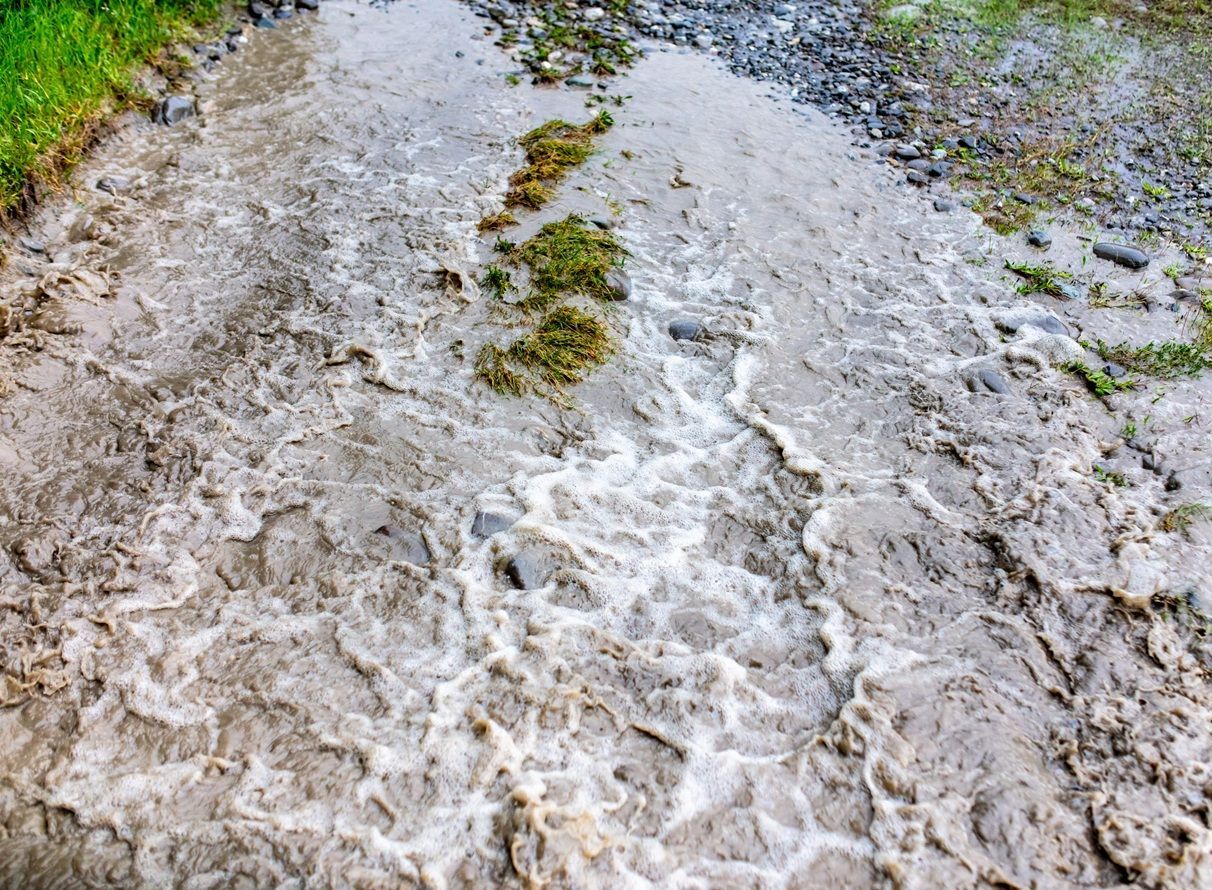
Surface runoff is water moving across the ground.
It may travel:
- Down a hill
- Across a driveway
- Along tire tracks
- Through a yard
- Beside a building pad
- Into a ditch
- Over a culvert crossing
- From a neighboring property
- From a road
- From roofs or paved surfaces
Runoff becomes a problem when it is uncontrolled, concentrated, or directed toward areas that cannot safely handle it.
It may cause:
- Erosion
- Gravel loss
- Ruts
- Washouts
- Sediment buildup
- Slope damage
- Wet foundations
- Culvert overflow
- Ponding in low areas
Runoff often creates the standing water seen farther downhill.
The Same Storm Can Create Both Problems
Consider a sloped property with a driveway crossing the natural water path.
During heavy rain:
- Water runs downhill as surface runoff.
- The driveway blocks or slows the flow.
- The culvert cannot carry enough water.
- Water collects on the uphill side.
- Standing water forms.
- The crossing eventually overflows.
- Runoff washes gravel from the driveway.
In this example, the property has both moving water and trapped water.
Correcting only the low area may not solve the uphill runoff.
Correcting only the runoff path may not drain the area where water has already become trapped.
The entire water route should be considered.
Signs the Main Problem Is Standing Water
Standing water is likely the main issue when:
- Water stays in one location after rain
- The ground remains soft or muddy
- The area has no visible outlet
- Grass or plants repeatedly fail
- Water collects in a shallow depression
- Gravel sinks into the ground
- The area stays wet longer than surrounding property
- Water pools beside a structure
- A ditch holds water instead of moving it
- A trench or repaired area has settled
The key sign is that the water is not moving away.
Signs the Main Problem Is Surface Runoff
Surface runoff is likely the main issue when:
- Water visibly crosses the property during rain
- Soil or gravel moves downhill
- Channels form in the ground
- Driveways develop washouts
- Ditches carry fast-moving water
- Sediment collects at lower elevations
- Water enters from neighboring land
- Downspouts create erosion
- Slopes develop rills or gullies
- Culvert outlets wash out
The key sign is visible movement and erosion.
What Causes Standing Water?
Standing water can result from several conditions.
Low Grade
The area sits lower than the surrounding ground and has no outlet.
Compacted Soil
Dense soil may absorb water slowly.
Saturated Clay
Clay-heavy ground may hold water near the surface.
Blocked Outlet
A ditch, culvert, pipe, or swale may be obstructed.
Poor Final Grading
The land may slope toward a building, driveway, or low area.
Settlement
Fill, utility trenches, stump holes, or disturbed areas may sink.
High Groundwater or Seepage
Water may enter from below the surface.
A Driveway or Pad Blocking Drainage
A raised improvement may interrupt the natural water path.
Too Much Runoff Entering the Area
The low spot may receive water from a much larger uphill drainage area.
The correct repair depends on which cause is controlling the problem.
What Causes Surface Runoff Problems?
Runoff becomes damaging when water is concentrated or allowed to gain speed.
Common causes include:
- Steep slopes
- Bare soil
- Lost driveway crown
- Blocked ditches
- Roof-water discharge
- Poorly placed fill
- Missing culverts
- Undersized culverts
- Paved or compacted surfaces
- Water entering from higher property
- Construction changing the grade
- No stable outlet
Surface runoff is not always avoidable, but it should have a controlled path.
Soil Type Can Change How the Problem Appears
Soil affects how quickly water absorbs into the ground.
Clay
Clay may absorb slowly and remain saturated.
Topsoil
Topsoil can hold moisture and may become soft under traffic.
Sandy Soil
Sandy soil may drain faster but can erode when water is concentrated.
Organic Soil
Organic material may remain soft and unstable.
Compacted Fill
Compacted areas may shed water rather than absorb it.
Loose Fill
Loose material may settle, erode, or trap water.
A property may have standing water because the soil absorbs poorly, because the grade is wrong, or because both conditions are present.
Soil correction alone does not replace a working drainage outlet.
Slope Determines Where Water Wants to Go
Even small elevation differences can control drainage.
Water may move toward:
- A building
- A driveway
- A low yard area
- A neighboring property
- A pond
- A ditch
- A culvert
- The bottom of a fill slope
A property does not need to appear steep for surface runoff to create problems.
A long, gentle slope can collect runoff from a large area.
Accurate grading should create enough fall to move water without concentrating it into an erosive channel.
Why Standing Water Develops Beside Driveways
Driveways often sit higher than the surrounding ground.
That may block water moving across the property.
Standing water may develop when:
- No culvert crosses the driveway
- The culvert is too high
- The pipe is blocked
- The roadside ditch has filled in
- The driveway edge traps water
- The outlet is higher than the inlet
- The driveway was raised without drainage planning
The repair may involve culvert work, ditch reshaping, driveway grading, excavation, or creating a different drainage path.
Why Runoff Travels Down Gravel Driveways
A gravel driveway may become the easiest downhill route when:
- The crown has flattened
- Tire tracks form channels
- Ditches are blocked
- Uphill runoff reaches the surface
- The route is steep
- Cross drainage is missing
- Water cannot leave at the sides
Once runoff follows the driving surface, it can carry gravel, deepen ruts, and expose the base.
The solution may require restoring surface shape and redirecting water before it travels too far down the driveway.
Roof Water Can Create Both Conditions
Downspouts and roof edges release concentrated water.
If that water is discharged onto a slope, it may create surface runoff and erosion.
If it is discharged into a flat or enclosed area, it may create standing water.
Roof-water planning may involve:
- Downspout extensions
- Drainage pipe
- Splash protection
- Swales
- Catch basins
- Stabilized outlets
- Regrading around the building
Roof water should be directed away from foundations and toward a safe outlet.
Groundwater and Seepage Require a Different Approach
Not every wet area is caused by surface runoff.
Water may appear from below because of:
- Springs
- Seasonal groundwater
- Seepage through a slope
- Water trapped behind fill
- Natural soil layers
- Leaking utilities
- Old drainage paths
Signs of subsurface water include:
- Wet ground during dry weather
- Water appearing from a cut slope
- Persistent saturation
- Water entering trenches
- Soft ground with no visible surface source
- Seepage at the base of a hill
Surface regrading may help manage runoff but may not stop groundwater.
The site may need an interceptor drain, drainage stone, pipe, excavation, or another subsurface solution.
How Erosion Helps Identify Surface Runoff
Erosion shows where water is moving.
Look for:
- Rills
- Gullies
- Exposed roots
- Washed gravel
- Sediment fans
- Cut banks
- Scoured outlets
- Bare channels
- Soil collected at lower ground
These marks can reveal the runoff path even when the property is dry.
The deepest damage is not always the water source.
The source may be farther uphill.
How Sediment Helps Identify the Water Path
Moving water carries soil and deposits it where the flow slows down.
Sediment may collect:
- At culvert inlets
- In low areas
- At the bottom of slopes
- Along driveway edges
- Inside ditches
- Near pond entries
- Against structures or fencing
The location of the sediment can show where runoff enters, slows, and becomes standing water.
Removing sediment may restore part of the drainage system, but the reason it accumulated should also be addressed.
A Drainage Outlet Is Essential
Both standing water and surface runoff require a safe destination.
Possible outlets include:
- A ditch
- A swale
- A drainage channel
- A basin
- A pond
- Lower stable ground
- An approved stormwater system
- A protected natural drainage path
An outlet should not:
- Erode bare soil
- Discharge toward a structure
- Create a new wet area
- Send concentrated water across a driveway
- Affect neighboring property
- End at a blocked or higher elevation
A drainage feature without a usable outlet may only move water from one problem area to another.
When Regrading May Be Enough
Regrading may help when:
- The problem is a shallow low area
- The soil is stable
- A nearby outlet exists
- Water only needs a small elevation correction
- The area has enough space for a gentle slope
- No major runoff enters from outside the site
Regrading may involve:
- Filling low areas
- Cutting high spots
- Creating positive drainage
- Shaping a swale
- Restoring driveway crown
- Smoothing settlement
Regrading should be completed with suitable material and proper compaction where needed.
When Drainage Pipe May Be Needed
Drainage pipe may help when surface grading alone cannot move water around or through an obstacle.
Possible uses include:
- Carrying water beneath a driveway
- Extending downspouts
- Moving water from a catch basin
- Draining a low area
- Intercepting subsurface seepage
- Connecting ditches or swales
- Moving water away from a building
Pipe installation should account for:
- Slope
- Inlet elevation
- Outlet elevation
- Pipe type
- Bedding
- Backfill
- Compaction
- Maintenance access
- Outlet protection
Pipe installed without enough fall may hold water or collect sediment.
When a Swale or Ditch May Work Better
Open drainage features can move surface runoff without enclosing it in pipe.
A swale or ditch may be useful when:
- Enough space is available
- The property has natural fall
- Runoff volume is significant
- Maintenance access is important
- Water needs to be intercepted uphill
- A driveway or pad needs protection
Open features should have:
- Stable slopes
- Enough fall
- A clear outlet
- Erosion protection where needed
- A shape that can be maintained
A ditch that is too flat or disconnected may become another standing-water area.
When Excavation Is Part of the Solution
Excavation may be needed when:
- A low area must be opened to an outlet
- Unsuitable soil needs removal
- A culvert crossing must be rebuilt
- Drainage pipe needs installation
- A ditch or basin must be created
- A slope must be reshaped
- Saturated material must be removed
- Water is trapped behind existing fill
Excavation should be coordinated with grading, drainage, hauling, and stabilization.
Digging a deeper hole without creating a way for water to leave may worsen the problem.
Standing Water Near Buildings Needs Early Attention
Water near a house, shop, barn, garage, or commercial structure can affect:
- Foundations
- Crawl spaces
- Basements
- Slabs
- Utility trenches
- Landscaping
- Driveways
- Building access
Warning signs include:
- Water against walls
- Wet crawl spaces
- Mud at entrances
- Erosion near corners
- Sunken backfill
- Downspouts ending near the foundation
- Grade sloping inward
The solution may involve both surface and subsurface drainage.
The building elevation and surrounding grade should be reviewed before placing more soil or installing isolated drains.
Standing Water on a Building Pad or Construction Site
A building site that holds water may experience:
- Soft subgrade
- Delayed work
- Poor compaction
- Rutting
- Mud
- Foundation excavation problems
- Unstable fill
- Erosion
Possible causes include:
- Pad set too low
- Incomplete drainage
- No temporary outlet
- Fill placed over wet soil
- Water entering from uphill
- Construction access blocking flow
Temporary drainage may be needed during construction, followed by permanent grading and drainage before completion.
Surface Runoff on Slopes Requires Stabilization
Redirecting water is only part of the solution when slopes are already eroding.
The area may also need:
- Seeding
- Erosion-control blankets
- Riprap
- Check dams
- Outlet protection
- Slope reshaping
- Retaining support
- Drainage diversion
- Vegetation
- Stabilized channels
The water source should be managed before repairing the damaged slope.
Otherwise, new material may wash away.
How to Observe the Property During Rain
Wet-weather observation can reveal conditions that are hidden during dry weather.
From a safe location, look for:
- Where water first enters
- Which direction it travels
- Whether it crosses driveways
- Where it slows down
- Where standing water forms
- Whether culverts overflow
- Which ditches are working
- Where erosion begins
- Whether water reaches structures
- Where it finally leaves the property
Photos and videos during rain can be useful when requesting a site review.
Do not enter fast-moving water, unstable slopes, flooded crossings, or unsafe drainage areas.
Common Misdiagnosis Mistakes
Treating Every Wet Area as a Low Spot
The true cause may be runoff entering from uphill.
Installing a Drain Without Confirming an Outlet
The pipe may not move water effectively.
Filling Standing Water With Topsoil
The new material may settle or become saturated.
Treating Erosion Without Redirecting Runoff
The damage may return.
Adding Gravel Over Wet Ground
The stone may sink into unstable soil.
Cleaning a Culvert Without Evaluating Capacity
The crossing may still overflow.
Redirecting Water Toward Another Property Area
One problem may create another.
Assuming Surface Grading Will Stop Groundwater
Subsurface water may require a different solution.
A Practical Drainage Evaluation Process
1. Identify the Water Source
Determine whether it comes from rainfall, a road, roofs, uphill property, groundwater, or another feature.
2. Identify Whether It Moves or Collects
Is the main problem runoff, ponding, or both?
3. Follow the Water Path
Track where it enters, travels, slows, and exits.
4. Review Existing Drainage Features
Inspect culverts, ditches, swales, pipe, outlets, and basins.
5. Check the Grade
Identify low areas, blocked paths, and slopes directing water toward improvements.
6. Evaluate the Soil
Look for saturation, soft ground, clay, organic material, and settlement.
7. Determine a Safe Outlet
Confirm where water can leave without creating erosion or affecting other property.
8. Match the Solution to the Cause
Use grading, drainage, excavation, culverts, stabilization, or a combination based on the full site.
Related Service Direction
Drainage, Culverts & Stormwater
Correct standing water, runoff, ditches, culverts, drainage pipe, swales, outlets, and stormwater flow.
Grading & Leveling
Correct low areas, reshape slopes, restore positive drainage, and improve surface water movement.
Excavation & Site Prep
Open drainage paths, remove unsuitable material, prepare trenches, and reshape problem areas.
Gravel Driveways
Repair washouts, standing water, soft areas, failed crossings, and driveway surface drainage.
Erosion Control & Retaining Walls
Stabilize runoff paths, slopes, outlets, banks, and areas damaged by moving water.
Ponds & Water Management
Improve basins, pond inflow, spillways, overflow routes, retention areas, and rural drainage systems.
Related Project Direction
Fixing Drainage & Water Problems
See how grading, excavation, pipe, culverts, ditches, swales, outlets, and erosion control can be combined around the full water path.
Building a Shop, House, Garage, Barn, or Metal Building
Plan runoff and standing-water control before pad preparation, driveway construction, utilities, concrete, and final grading.
Full Project Management
Coordinate drainage correction with the larger excavation, grading, access, and site-preparation needs of the property.
Keep Reading
Signs Your Property Has a Drainage Problem
Review the warning signs of poor drainage, including soft ground, erosion, standing water, failed culverts, and driveway damage.
Why Excavation and Drainage Should Be Planned Together
Learn how cuts, fills, pads, slopes, driveways, and trenches change water movement.
Culvert and Driveway Drainage Planning
See how ditch flow, pipe placement, driveway elevation, inlets, outlets, and cover work together.
Not Sure Whether the Problem Is Runoff or Trapped Water?
W Brown Construction LLC can review where the water originates, how it moves, where it collects, and which combination of grading, drainage, excavation, culverts, or stabilization may be needed.